Boundaries
Keep domain decisions distinct from provider and game services.
 Michael Williams
Independent systems portfolio
I shape product systems that make complex workflows legible across local AI, music production, tuning, and simulation—one clear boundary, feedback loop, and saved state at a time.
Keep domain decisions distinct from provider and game services.
Make the next action, its inputs, and its owner visible.
Return results to the person who chooses what happens next.
Released & in motion
Four public App Store products, one app in internal testing, and one playable prototype. Each case study separates current state from intended direction.
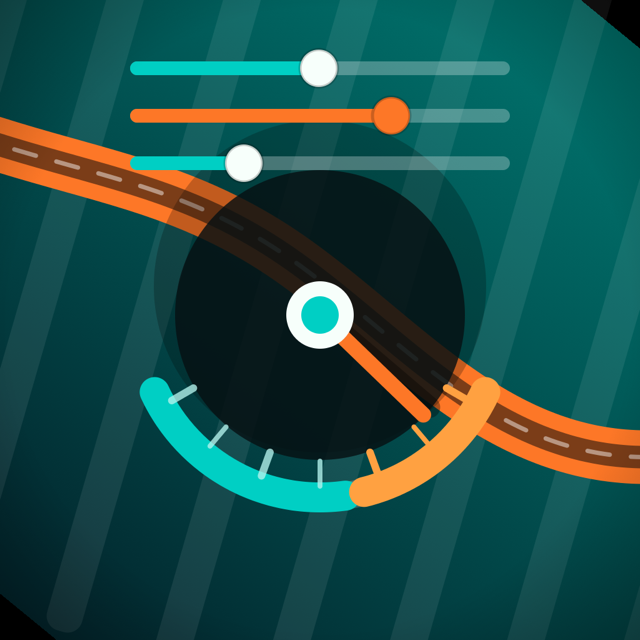
A player-led tuning companion: review supported FH6 settings, apply them in game, and use the drive to guide the next adjustment. FH5 remains a build-plan and research path.

A local-first vocal-production studio for recording, editing, mixing, lyric work, and portable export, now available on the App Store for iPhone and iPad.
“An agentic harness in the palm of your hands.”
An AI command center for managing models, machines, personas, teams, chat, image generation, and repeatable workflows across local, on-device, and cloud providers.
A century-spanning aviation strategy game. Design aircraft, build a workforce, win contracts, navigate historical eras, and grow an aerospace company from 1910 into the future.
A native iPhone and iPad cockpit for local and on-device models, ComfyUI image workflows, connected nodes, and generated work. Chat, Create, Models, and Settings make the main surfaces distinct.
A mobile-first political dynasty prototype where players govern a cutaway civic estate, resolve crises, and carry one polity across changing regimes.
A vehicle-manufacturing tycoon prototype: design builds, service and qualify vehicles, fulfil production orders, and grow a saved fleet.
A local-first agent operating system and AI compute control plane with stable Contacts, bounded workspaces, observable delegation, and shared WebUI and TUI clients.
A lightweight framework that separates governance, current intent, bounded memory, accountable personas, and fresh acceptance without making ordinary work heavy.
These projects remain available for context without competing with current releases and active work.
Repository sync:A retired native workbench for discovering, loading, comparing, and orchestrating local models.
A past exploration of multi-model workspaces and persistent projects. Inactive and retained for reference.
An earlier song catalog, rights, release, and artist-operations workspace adjacent to PocketDAW.
A Clean Swift architectural exploration with a finance vertical slice and supporting design work.
The original specification-kit precursor that became the active Harness OS implementation.
The public support site, issue board, and feedback relay companion for LM Manager Pro.
The public aerospace support surface and planned issue bridge for the Fabricon family.
A minimal 2020 repository retained as an early Unreal Engine learning artifact.
An archived case study of a private control room for computing capacity and Codex sessions. The former dashboard is no longer current.
How I build
The recurring idea across this work: give people serious capability without making the interface feel like a control panel they need a manual to operate.
Private data and capable hardware should stay useful even when the network disappears.
Platform conventions are a design advantage, not a limitation to work around.
The best tools reveal relationships, state, and progress—not just a collection of screens.
See the code, follow the progress, or start a conversation.
github.com/Sankofa06